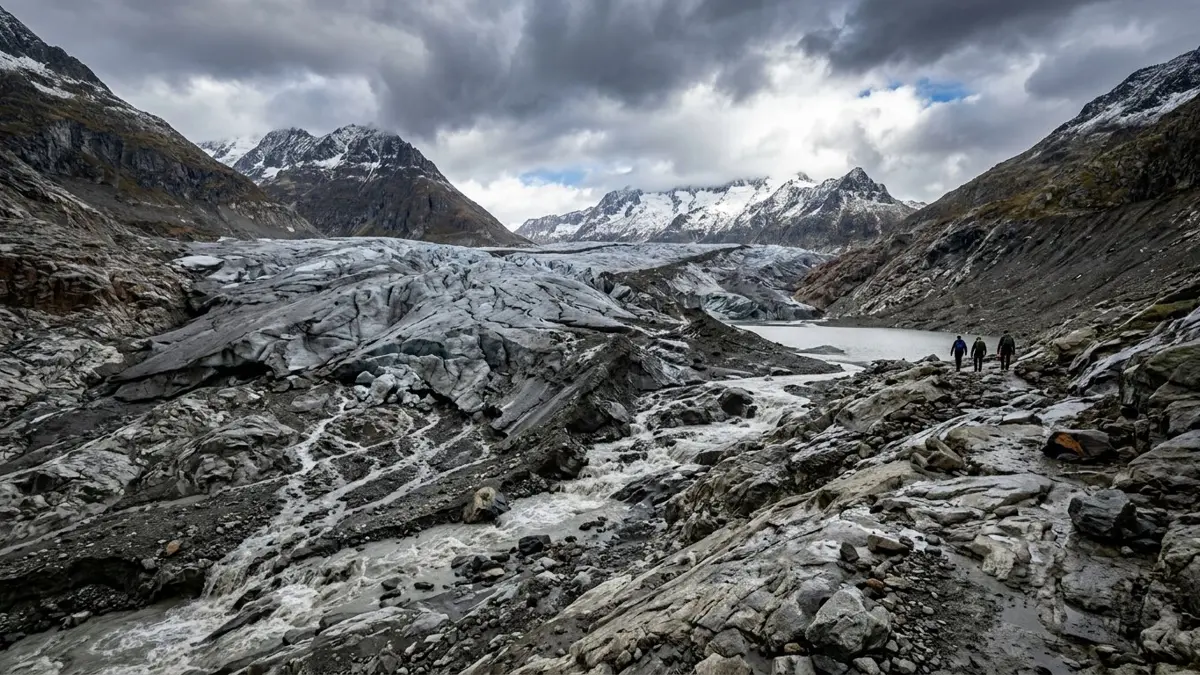
Alpine glaciers lost more ice this year than in any year since records began, according to preliminary figures released on Thursday, after an unusually warm October extended the melt season deep into autumn.
Measurements from more than 170 monitored glaciers showed an average thinning of nearly three metres. Researchers said a heavy snowpack last winter had briefly raised hopes of a reprieve, but the protective layer was gone by mid-July.
"Snow is the glacier's sunscreen," said a glaciologist who has surveyed the region for two decades. "Once it's gone, the old ice underneath is dark and it melts very fast."
Water and tourism at risk
The retreat has practical consequences. Hydropower operators are planning for lower summer flows within a generation, and several ski resorts have shortened their glacier skiing seasons for the third year in a row.
Mountain guides report new rockfall hazards on classic routes as ice that once held loose slopes in place disappears.
Scientists stress that the long-term trend matters more than any single year — but say this year shows how quickly a run of warm months can undo a good winter.